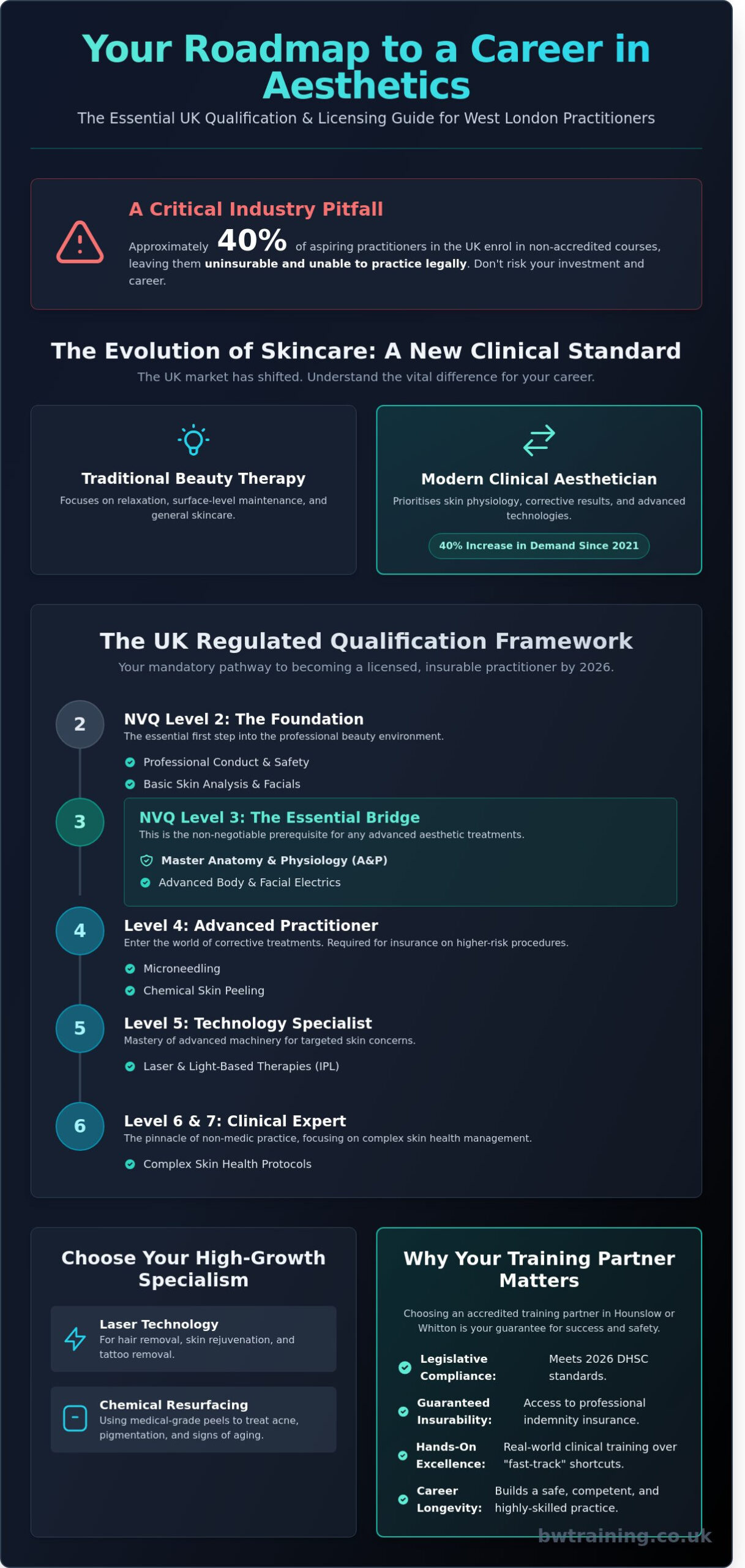
Did you know that approximately 40% of aspiring practitioners in the UK aesthetics sector initially enrol in non-accredited courses that leave them uninsurable and unable to practice legally? It’s a daunting reality when you’re simply trying to start a new career. You’ve likely felt the frustration of wading through conflicting advice about NVQ Level 4 versus Level 7 qualifications, all while worrying about the specific licensing rules enforced by Hounslow and Richmond councils. You deserve a clear path that prioritises your professional integrity and your clients’ safety.
This guide provides the exact roadmap you need to become a qualified aesthetician in West London, ensuring you invest in training that delivers real-world compliance and career longevity. We’ll demystify the 2026 regulatory landscape, break down the essential accreditation steps, and help you identify a local training centre that values hands-on excellence over “fast-track” shortcuts. By the end of this article, you’ll have the confidence to take your first step toward a successful, fully licensed practice.
Key Takeaways
- Understand the vital distinction between traditional beauty roles and the modern aesthetician, ensuring you position yourself correctly in the 2026 UK clinical market.
- Navigate the regulated qualification framework from Level 2 to Level 7, identifying why NVQ Level 3 serves as your essential bridge to advanced practice.
- Explore high-growth specialisms such as laser technology and chemical resurfacing to choose a career path that matches your professional ambitions.
- Discover the step-by-step process for qualifying in West London, from securing your Anatomy & Physiology certification to completing hands-on clinical training.
- Learn why choosing an accredited training partner in Hounslow or Whitton provides the legislative compliance and “peace of mind” needed to launch your career safely.
What is an Aesthetician? Defining the Role in the UK Market
The role of an aesthetician in the UK has transformed from a luxury service into a clinical discipline. While traditional beauty therapy focuses on relaxation and surface-level maintenance, modern aesthetics prioritises skin physiology and corrective results. You’ll find that an aesthetician operates at the intersection of Cosmetology and clinical science. This shift reflects a 40% increase in demand for medical-grade treatments since 2021. Professionals now manage complex skin concerns using advanced technologies like radiofrequency, high-intensity focused ultrasound (HIFU), and medical-grade chemical peels.
Your daily responsibilities extend far beyond the treatment room. You’ll conduct detailed clinical consultations, perform skin analysis using digital diagnostic tools, and curate bespoke home-care regimes. It’s a role built on trust and technical precision. By 2026, the distinction between a high-street beautician and a clinical aesthetician will be even sharper as the industry moves toward stricter medical alignment. You aren’t just improving appearance; you’re managing the health of the body’s largest organ.
Aesthetician vs. Esthetician: The British Context
Terminology matters when you’re building your CV. In the UK, the spelling “aesthetician” is a vital marker of professional identity. While the US often uses “esthetician” to describe general skincare specialists, the British market reserves “aesthetician” for those working in clinical environments. When you apply for roles in London’s Harley Street or high-end regional clinics, this spelling signals your focus on advanced skin science. It tells employers you’ve moved beyond basic facials to understand the cellular mechanics of the dermis. This distinction is essential for your professional standing and helps you align with the medical-grade standards expected by modern clients.
The Scope of Practice for Non-Medics
The UK aesthetic landscape is changing rapidly. By 2026, the Department of Health and Social Care (DHSC) will implement a mandatory national licensing scheme for non-surgical cosmetic procedures. This means non-medics must hold specific Level 4 to Level 7 qualifications to perform procedures deemed higher risk. You can still build a thriving career without a nursing or medical degree, provided you secure professional indemnity insurance. Most reputable insurers now require a minimum of an Ofqual-regulated Level 4 qualification to cover treatments like microneedling or deep chemical peels.
- Level 4: Focuses on skin peeling and microneedling.
- Level 5: Covers laser and light-based therapies.
- Level 6: Involves more complex skin health protocols.
Regulatory compliance is your best tool for career longevity. It’s about more than just ticking boxes; it’s about providing the peace of mind your clients deserve. By mastering these clinical protocols early, you position yourself as a safe, competent, and highly skilled practitioner in a competitive market.
Navigating the UK Aesthetics Qualification Framework (Levels 2-7)
To build a successful career as an aesthetician, you must follow a structured educational path that aligns with UK regulatory standards. The industry is rapidly moving towards a mandatory licensing scheme. This means your qualifications are no longer just certificates; they are your legal license to operate. By following the Ofqual-regulated framework, you ensure your practice is safe, insured, and future-proofed against upcoming legislative changes expected by 2026.
Foundational Levels: Building Your Base
Your journey begins with the basics of skin health and professional conduct. Obtaining an NVQ Level 2 Beauty Therapy qualification is the first step. This level focuses on skin analysis, basic facials, and the essential health and safety protocols required in a clinical environment. It sets the standard for how you interact with clients and manage a professional workspace.
The NVQ Level 3 Beauty Therapy serves as the vital bridge to advanced aesthetics. At this stage, you master Anatomy and Physiology (A&P). This knowledge is your most powerful tool. You cannot safely perform advanced treatments without a deep understanding of the muscular, skeletal, and circulatory systems. According to the National Careers Service, these core levels are fundamental for anyone entering the beauty and clinical sector.
- Professionalism: Learning the ethics of client care and consultation.
- A&P Mastery: Understanding how the body responds to invasive treatments.
- Insurance Compliance: 92% of leading UK insurance providers now require a full Level 3 certificate before granting indemnity for advanced procedures.
Skipping these foundations is a high-risk strategy that often leads to insurance rejection or professional liability. We recommend starting with a solid base to gain the confidence to succeed in more complex disciplines.
Advanced Qualifications: Specialising in 2026
Once your foundation is secure, you can move into specialised clinical territory. Level 4 is the entry point for high-demand treatments. This level focuses on mastering skin peeling, microneedling, and the use of Lasers and IPL for hair removal and skin rejuvenation. It represents a shift from relaxation-based beauty to results-driven clinical practice.
Level 5 Aesthetics Practice takes your expertise further by focusing on managing skin health at a clinical level. This includes complex skin conditions and more intensive rejuvenation techniques. For those aiming for the pinnacle of the profession, the Level 7 Diploma is the gold standard. This postgraduate-level qualification covers dermal fillers and botulinum toxins. It ensures you meet the highest safety standards for injectables, providing peace of mind for both you and your clients. By 2026, these higher-level qualifications will likely become the minimum requirement for practitioners performing invasive procedures in the UK.
Choosing Your Aesthetic Specialism: Popular Career Paths
The UK aesthetics market is expanding rapidly, with consumer spending on non-surgical treatments projected to reach £3.6 billion by 2026. As a modern aesthetician, you aren’t just a practitioner; you’re a specialist. Deciding on a niche allows you to master specific techniques and build a reputation for excellence. Whether you focus on skin health or advanced injectables, your career path should align with both your passion and the current market demand.
The Skin Health Specialist has seen a massive rise in popularity. These professionals focus on cellular rejuvenation through chemical peels and bespoke facials. Data shows that 40% of clients now prioritise long-term skin quality over quick-fix solutions. If you prefer high-energy technology, the Laser Technician path offers a lucrative route specialising in permanent hair removal and skin resurfacing. For those aiming for the top tier of clinical practice, becoming an Advanced Injector is the goal. This requires mastering accredited Botox courses to ensure every procedure is safe and effective.
The most successful practitioners often combine these skills. Offering a holistic “full-face” consultation approach ensures you treat the person, not just the symptom. This strategy builds deep trust and significantly increases client retention rates.
Injectable Aesthetics: Fillers and Toxins
Entering the world of injectables requires a commitment to precision. Most practitioners begin their journey with accredited lip filler courses, which provide the foundational skills for volume restoration. Beyond lips, the science of facial contouring has evolved. There is a 25% year-on-year increase in requests for jawline, chin, and cheek enhancements to create a balanced profile. Safety is your absolute priority. Managing complications is the non-negotiable side of advanced aesthetics. You must be prepared to handle adverse reactions with calm, clinical confidence to protect your clients and your professional reputation.
Skin Rejuvenation and Technology
In West London, the demand for Microneedling and Chemical Peels has surged by 30% since 2023. Clients want results-driven treatments that require minimal downtime. You can further enhance your treatment menu by integrating technology like Plasma Pen or Fat Dissolving injections. These services offer high profit margins and deliver consistent, visible results. To maintain the highest standards, always refer to the Hair and Beauty Industry Authority (Habia) for the latest industry benchmarks. Building a diverse menu ensures your business remains resilient and continues to empower your clients through every stage of their skin journey.
Step-by-Step: How to Qualify as an Aesthetician in West London
Qualifying as a professional aesthetician requires a structured approach to meet both industry standards and legal requirements. In West London, the pathway is clear but demands commitment to high-quality education. Follow these five steps to build a compliant career.
- Step 1: Enrol in a regulated Level 2 or 3 Beauty Therapy course. This provides the fundamental knowledge of skin biology and professional standards needed for any advanced work.
- Step 2: Complete your Anatomy & Physiology (A&P) certification. You need a deep understanding of the 11 body systems to perform advanced treatments safely and effectively.
- Step 3: Gain hands-on experience in a supervised training centre. Theory isn’t enough. You must practice on live models under expert supervision to build muscle memory and clinical confidence.
- Step 4: Progress to Level 4 or 5 CPD-accredited aesthetic modules. These levels cover advanced procedures such as chemical peels, microneedling, and laser treatments.
- Step 5: Apply for your local borough treatment licence. If you’re based in Hounslow, you’ll need to register with Hounslow Council’s health and safety team to ensure your premises meet local standards.
Finding the Right Training Academy in London
Success starts with the right environment. Look for academies that offer VTCT accreditation and maintain small class sizes, typically capped at 6 students per session. This ensures you receive direct, personalised feedback. Avoid “online-only” aesthetics training at all costs. You can’t learn tactile, life-saving skills through a screen. We always recommend visiting centres in Hounslow or Whitton before booking your course. Meeting your instructors face-to-face builds the peace of mind you need when investing in your future as an aesthetician.
Licensing and Compliance in West London
The regulatory landscape in West London is strict. Local authorities in Ealing and Richmond require a Special Treatment Licence under the London Local Authorities Act 1991. To secure this, you must organise a professional portfolio showing your accredited certificates and insurance documents for council inspections. Looking ahead, the government plans to introduce a national licensing scheme by 2026, overseen by the JCCP. Staying compliant now by choosing regulated training prevents future disruptions to your business. It’s about being prepared for the 100% mandatory standards coming to the industry.
Ready to start your journey with a provider that prioritises safety and excellence? Explore our accredited aesthetician training courses today.
Why Train at Beautiful World Academy in Hounslow or Whitton?
Choosing where to qualify as an aesthetician is a decision that defines your professional reputation. At Beautiful World Training Academy, we provide a training environment built on clinical authority and unwavering support. Our instructors aren’t just teachers; they’re active practitioners with over 15 years of experience in high-level skin health and safety protocols. This ensures every lesson you learn is grounded in current UK regulations and real-world results.
Our centres in Hounslow and Whitton are strategically located for easy access from Twickenham, Brentford, and Isleworth. We’ve created a space where local students can transition from learners to experts without the stress of a long commute. We focus on empowering you with the peace of mind that comes from total technical competence and compliance. You won’t just learn how to perform treatments; you’ll learn how to manage risks and protect your clients’ wellbeing.
The BW Training Academy Experience
True skill is developed through action. Our curriculum prioritises hands-on practice on live models within a clinical setting that replicates a professional workplace. We limit our intakes to ensure a 4:1 student-to-tutor ratio. This small group structure means you get immediate, personalised feedback on your technique, helping you build the steady hand required for advanced treatments. Our high-street locations in Hounslow and Whitton are designed to feel professional and approachable, ensuring you feel at home in a clinical environment from day one.
- Live Models: Gain experience on real skin types and diverse concerns rather than practicing solely on mannequins.
- Small Groups: Benefit from a 4:1 ratio that ensures you gain total confidence in your needlework and tool handling.
- Clinical Standards: Train in a space that meets the highest hygiene and safety requirements, preparing you for local authority licensing.
Your Future in Aesthetics Starts Here
We don’t just hand you a certificate and walk away. Our commitment to your career is lifelong. We offer dedicated guidance on setting up your own clinic, covering everything from £5 million public liability insurance requirements to clinical waste disposal contracts. Our alumni success stories span across West London and Leicester, with 82% of our 2024 graduates now running their own profitable practices or working in high-end medispas.
The path to becoming a successful aesthetician requires a clear roadmap. As the industry prepares for tighter licensing regulations expected by 2026, we’re here to ensure your training is future-proof. We help you bridge the gap between being a student and a business owner with practical, no-nonsense advice on client acquisition and retention. Book a consultation with our team today to map out your 2026 career path and take the first step toward professional independence.
Launch Your Professional Aesthetics Career in West London
Navigating the UK qualification framework is the first step toward a rewarding career in skin health. By progressing through Levels 2 to 7, you ensure your practice meets the highest safety standards required for the 2026 market. Choosing a local training hub in Hounslow or Whitton allows you to build professional connections within the West London community while you study. It’s about more than just a certificate; it’s about gaining the technical precision needed to excel in a competitive field.
Beautiful World Academy supports your journey as a VTCT Accredited Training Centre with over 10 years of educational excellence. We prioritise your confidence by providing intensive hands-on training with live models. This practical approach ensures you’ve mastered every procedure before you treat your first paying client. You’ll leave our academy not just as a qualified aesthetician, but as a competent professional ready to lead the industry with authority.
Take the definitive step toward your new future today. Secure your place on our next Aesthetics Training intake in Hounslow and start building a career you’re proud of. We’re ready to help you succeed.
Frequently Asked Questions
Do I need to be a nurse to become an aesthetician in the UK?
You don’t need to be a nurse or a medical professional to build a successful career as an aesthetician in the UK. While many medics enter the field, the most common route for others is through regulated Level 2 and Level 3 Beauty Therapy qualifications. These certifications provide the essential foundation in skin anatomy and physiology that you’ll need before progressing to advanced clinical procedures.
How long does it take to qualify as an aesthetician?
Qualifying as an aesthetician typically takes between 6 and 18 months depending on your chosen study path and current experience. A standard Level 3 Diploma in Beauty Therapy usually requires 6 months of intensive study. If you’re aiming for advanced Level 4 or 5 qualifications in skin peeling or microneedling, you should expect to invest an additional 9 months to meet all professional competency standards.
What is the difference between Level 3 and Level 4 aesthetics?
Level 3 focuses on foundational skin health and basic electrical facials; Level 4 introduces advanced non-surgical procedures. At Level 4, you’ll master technical skills like chemical peels, microneedling, and laser treatments. This progression ensures you have the professional confidence to handle complex skin concerns. Moving to Level 4 is a vital step for compliance with the latest 2024 industry safety standards and licensing requirements.
Can I get insurance as a non-medic aesthetician?
Yes, you can secure comprehensive professional indemnity insurance as a non-medic aesthetician if you hold OFQUAL-regulated qualifications. Specialist providers like Hamilton Fraser or Cathedral Insurance offer tailored policies for practitioners who’ve completed accredited Level 3 and 4 training. Having this coverage is essential for your peace of mind. it demonstrates your commitment to client safety and professional accountability in a competitive market.
How much can an aesthetician earn in London in 2026?
In 2026, a qualified aesthetician in London can expect an average starting salary of £35,000, with experienced practitioners earning upwards of £60,000 per year. These figures are based on the projected 5% annual growth within the UK’s £3.6 billion aesthetics sector. If you choose to run your own clinic, your earning potential increases significantly based on your client retention rates and the specific treatments you offer.
What qualifications do I need for dermal fillers?
To perform dermal fillers safely, you currently need a Level 5 or Level 7 qualification in injectables, or a medical degree. The UK government’s 2024 licensing consultation suggests that all practitioners will soon require a regulated Level 7 certificate to remain compliant. Investing in high-quality, hands-on training ensures you possess the technical precision and emergency complication management skills necessary for this advanced and serious role.
Is aesthetics a good career change for 2026?
Aesthetics remains an excellent career choice for 2026 because of the sustained demand for non-surgical enhancements across the country. Market data indicates that 70% of UK adults will consider a cosmetic treatment by 2026, creating a wealth of opportunities for skilled professionals. It’s a rewarding path that offers both financial stability and the chance to empower clients by improving their self-confidence through expert skin care and tailored treatments.
Where can I find accredited aesthetics courses in Hounslow?
You can find accredited aesthetics courses at BW Training, where we provide OFQUAL-regulated certification conveniently located for Hounslow residents. Our programmes focus on practical, life-saving skills and clinical excellence. We ensure every student leaves with the certification and confidence needed to excel in the industry. Check our current course calendar for upcoming Level 3 and Level 4 enrolment dates to start your professional journey today.