You might assume that a dentist’s deep knowledge of facial anatomy gives them an unbeatable advantage in the injectables market, but the truth is more nuanced. While dentists offer incredible precision, nurses bring a holistic patient management style that is equally vital for long-term clinical success. Deciding on doing aesthetics as a nurse vs dentist in 2026 isn’t about which degree is superior; it’s about how you adapt your specific clinical background to meet the UK’s rigorous new safety standards.
We know you’re likely feeling the weight of NHS burnout or the daily grind of traditional dental practice. It’s frustrating to face uncertainty regarding the new “traffic light” licensing system or the Nursing and Midwifery Council’s June 2025 face-to-face prescribing mandates. You deserve a clear path to professional growth that doesn’t leave you guessing about compliance. This guide provides that clarity. We’ll break down the unique clinical advantages each role offers, explain why the Level 7 Diploma has become the non-negotiable gold standard for 2026, and show you how to navigate local authority licensing to secure your financial independence and clinical peace of mind.
Key Takeaways
- Understand why dentists hold inherent prescribing rights and how nurses can navigate the latest NMC face-to-face consultation mandates for 2026.
- Compare the manual dexterity of dental professionals with the holistic patient management style of nursing to identify your unique competitive edge.
- Explore the career roadmap of doing aesthetics as a nurse vs dentist, focusing on how a Level 7 Diploma bridges the gap between your clinical roots and aesthetic mastery.
- Learn how to navigate the new “traffic light” licensing scheme to ensure your practice remains fully compliant and eligible for professional indemnity insurance.
- Identify high-growth opportunities in West London locations like Hounslow, Richmond, and Ealing for medical practitioners transitioning into private aesthetics.
The Shift to Medical Aesthetics for Nurses and Dentists
Medical aesthetics has evolved from a niche beauty service into a sophisticated clinical discipline. It’s no longer just about smoothing lines; it’s about patient safety and anatomical expertise. Medical aesthetics is a regulated clinical practice requiring both medical registration and specific procedural training. As we move through 2026, the UK market is shifting toward mandatory medical oversight to protect patients from substandard care. This transition often involves an emotional shift for practitioners. You’re moving from reactive healthcare, where you treat illness, to elective medicine, where you enhance well-being and confidence. For a deeper look at the field’s scope, you can consult this Aesthetic Medicine Overview. This shift isn’t just about learning new techniques. It’s about applying your existing clinical rigor to a new, rewarding context.
Why Healthcare Professionals are Pivoting in 2026
The demand for safe, practitioner-led treatments in the London area is at an all-time high. Patients in Hounslow, Richmond, and Ealing are increasingly aware of the risks associated with unlicensed practitioners. They want the security that comes with a medical background. Many healthcare professionals are choosing to pivot because they want to escape the rigid constraints of traditional clinical environments or the exhaustion of fixed NHS bands. Private aesthetic practice offers a level of financial potential and autonomy that traditional roles simply can’t match. It’s about taking control of your professional schedule while utilizing the skills you’ve spent years honing in a high-pressure environment.
The “Medic vs. Non-Medic” Debate
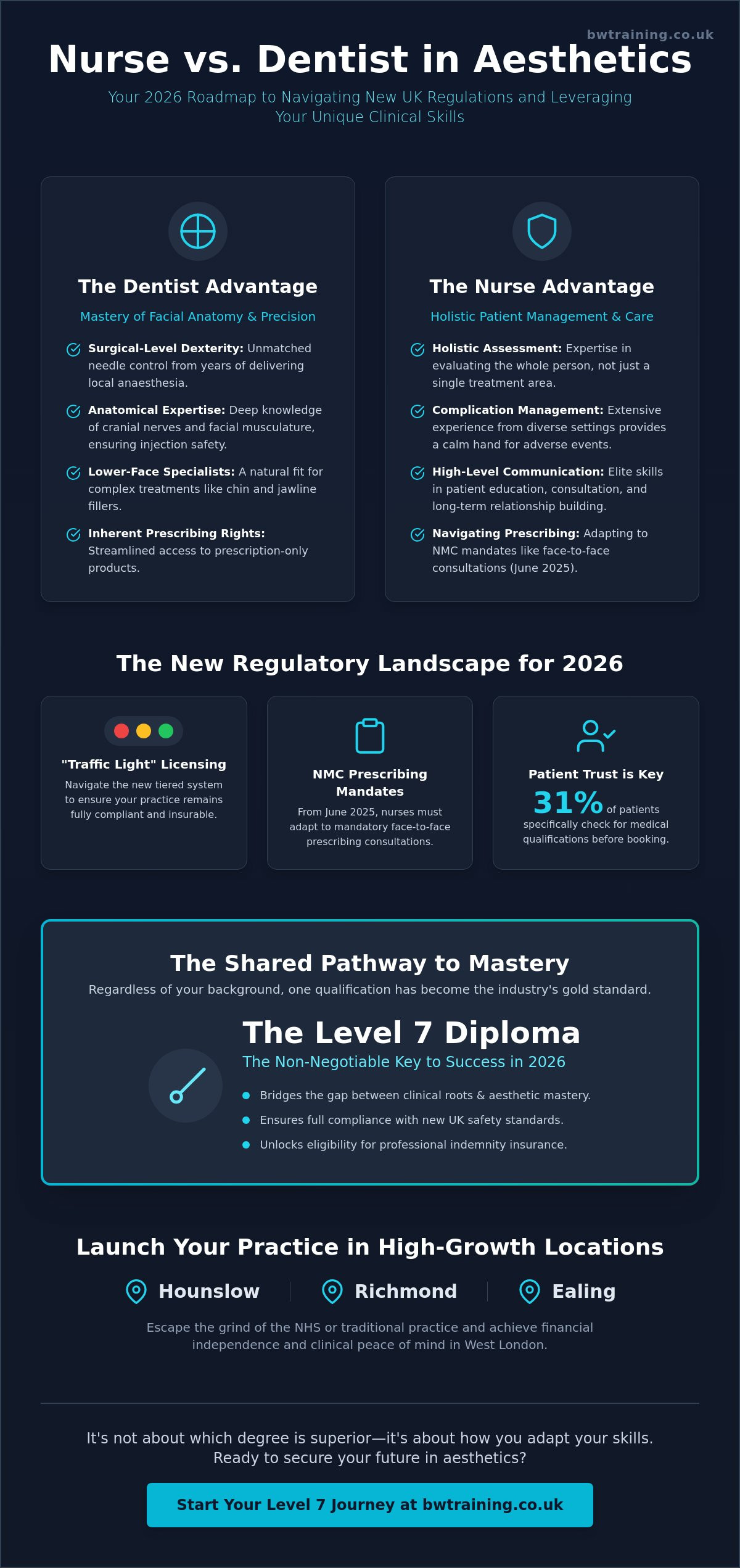
When considering doing aesthetics as a nurse vs dentist, your professional registration is your greatest asset. While the industry has seen a rise in non-medical injectors, being a registered professional provides immediate patient trust that cannot be bought. Some industry reports suggest that 31% of patients specifically check for medical qualifications before booking a procedure, making your NMC or GDC status a major competitive advantage. Organizations like the Joint Council for Cosmetic Practitioners (JCCP) continue to push for higher standards, reinforcing the idea that medical professionals belong at the forefront of this industry. This professional standing ensures you aren’t just performing a service; you’re providing a safe, clinical intervention. Doing aesthetics as a nurse vs dentist allows you to leverage your specific background, whether that’s the holistic care of nursing or the anatomical precision of dentistry, to lead the market in safety and efficacy.
Clinical Advantages: Facial Precision vs. Holistic Care
Every successful aesthetic practitioner starts with a rock-solid clinical foundation. Whether you are a nurse or a dentist, your existing background in sterile technique and risk management is your most valuable asset. While the technical skills differ, the commitment to patient safety remains identical. Understanding the nuances of doing aesthetics as a nurse vs dentist helps you lean into your strengths while identifying where you might need extra support. This professional baseline is increasingly important as UK Aesthetics Regulation moves toward stricter mandatory standards for 2026.
The Dentist Advantage: Mastery of Facial Anatomy
Dentists possess an almost surgical level of manual dexterity. Years of delivering local anaesthesia in the confined space of the oral cavity lead to incredible needle control and precision. This background makes you a natural expert at lower-face treatments like chin and jawline fillers. Your deep knowledge of cranial nerves and facial musculature ensures that every injection is placed with anatomical certainty. Additionally, the “chairside manner” developed in a dental surgery translates perfectly to the aesthetic consultation. You already know how to calm a nervous patient and explain complex procedures clearly, which builds immediate trust during a first visit.
The Nurse Advantage: Holistic Patient Management
Nurses bring a uniquely holistic perspective to aesthetic medicine. You aren’t just looking at a single wrinkle; you’re assessing the whole person. This expertise in systemic patient assessment is vital for long-term wellness and managing potential complications effectively. Nurses often have extensive experience in diverse settings, from acute medicine to wound care, providing a calm, steady hand when dealing with adverse events. Your high-level communication skills are perfect for managing patient expectations and identifying psychological factors. This comprehensive approach ensures that patient safety remains the priority throughout the entire treatment journey.
Success in this field requires merging these clinical roots with specialized, regulated training. If you’re ready to build on your existing expertise, exploring a professional aesthetics course can help you transition safely into private practice. Both professions offer distinct advantages that contribute to a safer, more professional industry. Choosing the right path when doing aesthetics as a nurse vs dentist depends on how you want to leverage your specific medical history to serve your future clients.
Regulatory Realities: Prescribing and Insurance in 2026
The regulatory landscape of 2026 has brought much-needed structure to the industry. For anyone considering doing aesthetics as a nurse vs dentist, the most significant hurdle is often the legal right to prescribe. This isn’t just about administrative convenience; it’s about clinical autonomy and patient safety. The introduction of the risk-based “traffic light” system in England means that medium and high-risk procedures now require specific oversight or qualifications that weren’t as strictly enforced a few years ago. Understanding these rules is the only way to protect your patients and your professional reputation.
Prescribing Rights: A Major Differentiator
Dentists enter the field with a distinct advantage. Under General Dental Council (GDC) regulations, dentists hold inherent prescribing rights. This provides a “fast-track” to autonomous practice, as they can order prescription-only medicines (POMs) like Botulinum Toxin without external oversight. For nurses, the path is different. Unless you’ve completed the V300 Independent Prescribing course, you’ll need to work alongside a qualified prescriber to stock and use certain products. It’s a common point of confusion when comparing doing aesthetics as a nurse vs dentist, but it’s a gap that’s easily bridged with the right training pathway.
The rules became even stricter on June 1, 2025. The Nursing and Midwifery Council (NMC) now mandates that all nurse prescribers must conduct a face-to-face consultation before prescribing any non-surgical cosmetic medicine. This effectively ended the era of remote prescribing. If you’re a non-prescribing nurse, your designated prescriber must see the patient in person before you can perform the treatment. This change ensures that every patient receives a physical assessment, significantly reducing the risk of complications like the botulism cases seen in 2025. It’s a professional standard we fully support for the safety of our community.
Insurance and Accountability
Securing medical malpractice insurance is no longer a simple checkbox exercise. In 2026, providers in London and the surrounding areas like Hounslow require evidence of accredited, Ofqual-regulated training before they’ll offer coverage. They want to see that you’ve invested in your skills and understand the risks involved in high-stakes procedures. Maintaining your professional register with the NMC or GDC is vital. These bodies provide the ethical framework that separates medical professionals from high-street practitioners.
Insurance premiums are often lower for practitioners with a Level 7 aesthetics qualification. This certification proves to insurers that you’ve mastered the complexities of facial rejuvenation and complication management. When evaluating the costs of starting your practice, remember that professional indemnity insurance typically ranges from £100 to £300 per year for medical professionals. This investment provides the emotional security and legal protection you need to practice with confidence. Whether you’re in Richmond or Ealing, being fully compliant is the only way to build a sustainable, respected business.
The Shared Pathway: Training and Level 7 Mastery
Regardless of whether you start with a dental or nursing background, your educational journey converges at the same high standard. The Level 7 Diploma in Aesthetics Practice has become the non-negotiable benchmark for 2026. This qualification bridges the gap between your initial clinical training and the specialized demands of non-surgical rejuvenation. Choosing an accredited training provider in Hounslow or West London ensures you receive instruction that meets local authority licensing requirements while building your clinical confidence. The shared education pathway for doing aesthetics as a nurse vs dentist ensures that regardless of your background, you achieve the same level of clinical excellence and safety.
Step 1: Foundation and Anatomy
Your first step involves a deep dive into facial anatomy specifically for injectables. While you already understand the face, aesthetic medicine requires a different lens. You’ll learn to map the danger zones for hyaluronic acid fillers and master the pharmacology of Botulinum Toxin. This stage also focuses on the psychology of the consultation. Mastering informed consent and patient assessment is as critical as the injection itself. It sets the tone for a safe, professional relationship and ensures you meet the ethical standards expected of a medical practitioner.
Step 2: Advanced Techniques and Complications
Once you’ve mastered the basics, you’ll move into specialized areas like mid-face contouring and lip filler courses. These advanced modules require a steady hand and a keen eye for symmetry. However, technical skill is only half the battle. You must also master complication management. This includes learning emergency protocols and the correct use of Hyaluronidase to reverse dermal fillers if necessary. Building a portfolio of treated cases during your training provides the evidence needed for your Level 7 qualification, proving your competence to insurers and regulators alike.
The most vital part of this journey is hands-on practice. We prioritize training on live models under expert supervision. This participatory approach transforms abstract theory into practical skill. It’s about developing the muscle memory needed to perform treatments safely and effectively in your own clinic. When considering doing aesthetics as a nurse vs dentist, remember that your shared goal is patient safety. This level of mastery provides the emotional security that comes from being fully prepared for any clinical scenario. If you’re ready to start your transition, you can explore our Level 7 Diploma in Aesthetics Practice to secure your future in this growing industry.
Launching Your Practice in Hounslow and West London
West London has become a thriving hub for medical aesthetics. The demand for safe, clinical treatments in Richmond, Twickenham, and Ealing is surging as patients move away from high-street beauty salons. These affluent areas are seeing a 70% increase in male clientele and a growing interest in regenerative medicine. When you’re doing aesthetics as a nurse vs dentist, this local market offers a unique landscape for both professions. You aren’t just selling a service; you’re providing clinical expertise that patients in these communities actively seek out to ensure their safety and natural results.
Choosing the right business model is your first major decision. Many practitioners start with a home-based clinic or a mobile service to keep overheads low. Others prefer renting space in an established London academy to benefit from a professional environment. Networking with other medical professionals is vital. Building a referral-based business with local GPs or dental practices can provide a steady stream of high-quality patients who value your medical background. This collaborative approach fosters a sense of community responsibility and elevates the standard of care across the region.
Business Logistics for Medical Professionals
Setting up your clinical environment requires strict adherence to local authority standards. If you’re practicing in the London Borough of Hounslow, you’ll need to navigate specific special treatment license requirements. This involves inspections for hygiene and infection control. For those performing “red” category high-risk procedures, CQC registration is mandatory. Always source your products from reputable UK pharmacies to avoid the risks associated with unlicensed products. Marketing your medical credentials is your strongest tool. Highlight your NMC or GDC registration to differentiate yourself from non-medical injectors and build immediate rapport with safety-conscious clients.
Ongoing Mentorship and Support
Transitioning into private practice can feel isolating without a steady mentor. Accessing specialized aesthetic nurse training or dentist-led mentoring is vital for building your clinical confidence. We believe that training locally in Whitton or Hounslow provides the ongoing support you need to thrive. It allows for easier access to follow-up sessions and emergency advice, which is essential when managing complex cases. This investment in your personal growth ensures you remain at the forefront of the industry’s evolving standards.
The journey of doing aesthetics as a nurse vs dentist is a path toward professional autonomy and financial independence. By merging your clinical roots with expert training, you create a practice built on integrity and excellence. We are here to act as your reliable guide through every regulatory hurdle and clinical challenge. If you’re ready to transform your career and join a community of dedicated medical injectors, Book your consultation with BW Training Academy today and take the first step toward your new practice.
Step Into the Future of Aesthetic Excellence
The choice between doing aesthetics as a nurse vs dentist isn’t about which background is better, but how you apply your existing clinical excellence to a new, thriving landscape. We’ve explored how dentists can leverage anatomical precision and how nurses excel in holistic patient management. Success in 2026 depends on merging these professional roots with a Level 7 Diploma to meet the UK’s strict new licensing and prescribing standards.
Transitioning into private practice is a significant investment in your personal growth and financial independence. By training locally in West London, you gain the emotional security of knowing you are fully compliant and clinically prepared. Our academy provides the perfect environment for this transition, offering accredited NVQ Level 2-7 qualifications and hands-on training with live models. You’ll learn from expert instructors with medical backgrounds who are dedicated to your success.
If you’re ready to leave the constraints of traditional practice behind and build a business based on safety and integrity, we are here to support you. View our accredited Aesthetics Training Courses in Hounslow and start your journey toward aesthetic mastery today. Your future in medical aesthetics is within reach, and we look forward to helping you achieve it.
Frequently Asked Questions
Do I need a Level 7 diploma to practice aesthetics as a nurse or dentist in 2026?
While the new national licensing scheme is still being finalized, the Level 7 Diploma in Aesthetics Practice is the recognized gold standard for 2026. Most local authorities now require evidence of Ofqual-regulated qualifications to grant the necessary special treatment licenses. Holding this diploma ensures you’re fully prepared for the strictest regulatory tiers and provides the clinical depth needed to manage complex cases safely.
Can a nurse perform Botox without being a prescriber?
Yes, you can perform the injections, but you must work with a qualified prescriber who has conducted a face-to-face consultation with the patient. Since June 1, 2025, the NMC has strictly prohibited remote prescribing for non-surgical cosmetic medicines. This mandate ensures that every patient receives a physical assessment from a prescriber before you administer any prescription-only products like Botulinum Toxin.
Is it more profitable to do aesthetics as a dentist or a nurse?
Both professions offer excellent financial potential compared to traditional NHS roles. When considering doing aesthetics as a nurse vs dentist, dentists often have a slight edge in initial overheads because they hold inherent prescribing rights. This removes the cost of hiring a third-party prescriber. However, nurses often build highly successful practices by leveraging their holistic care skills to drive long-term patient loyalty and comprehensive skin health plans.
What are the most popular aesthetic treatments for beginners to learn?
Foundation Anti-Wrinkle Injections and Dermal Fillers are the essential starting points for any new practitioner. These treatments are the most requested by patients and provide the foundational skills needed for more advanced rejuvenation techniques. Mastering these core injectables allows you to build a reliable revenue stream while you gain the confidence to expand into advanced fillers or skin boosters.
How long does it take to transition from the NHS to a full-time aesthetics career?
Most medical professionals successfully transition within six to eighteen months. We find that many practitioners prefer a phased approach, starting part-time to build their patient portfolio and business systems while maintaining their primary clinical role. This steady progression reduces financial pressure and allows you to refine your technique and “chairside manner” at a pace that feels secure and manageable.
What insurance do I need as a medical aesthetics practitioner in the UK?
You must have specialized professional indemnity and medical malpractice insurance that specifically covers aesthetic procedures. In 2026, insurers require proof of accredited training and your active NMC or GDC registration before offering coverage. Standard policies for medical professionals typically range from £100 to £300 per year, providing the legal and financial security you need to practice with total confidence.
Can I practice aesthetics in my local Hounslow area after a foundation course?
You can start your practice, but you must first secure a special treatment license from Hounslow Council. This process involves a premises inspection and a review of your training certificates to ensure they meet local safety and hygiene standards. When doing aesthetics as a nurse vs dentist in West London, choosing an Ofqual-regulated training provider is the most reliable way to ensure your license application is approved without delay.