The “Wild West” era of UK aesthetics is officially over, and that’s the best news your future career could receive. You’re likely asking yourself, is a career in aesthetics worth it 2026, especially with the new mandatory licensing laws coming into effect this July. It’s natural to feel a bit unsettled by the shift from unregulated chaos to strict government standards. We understand the confusion surrounding Level 5 versus Level 7 requirements and the fear that a crowded market might leave you behind.
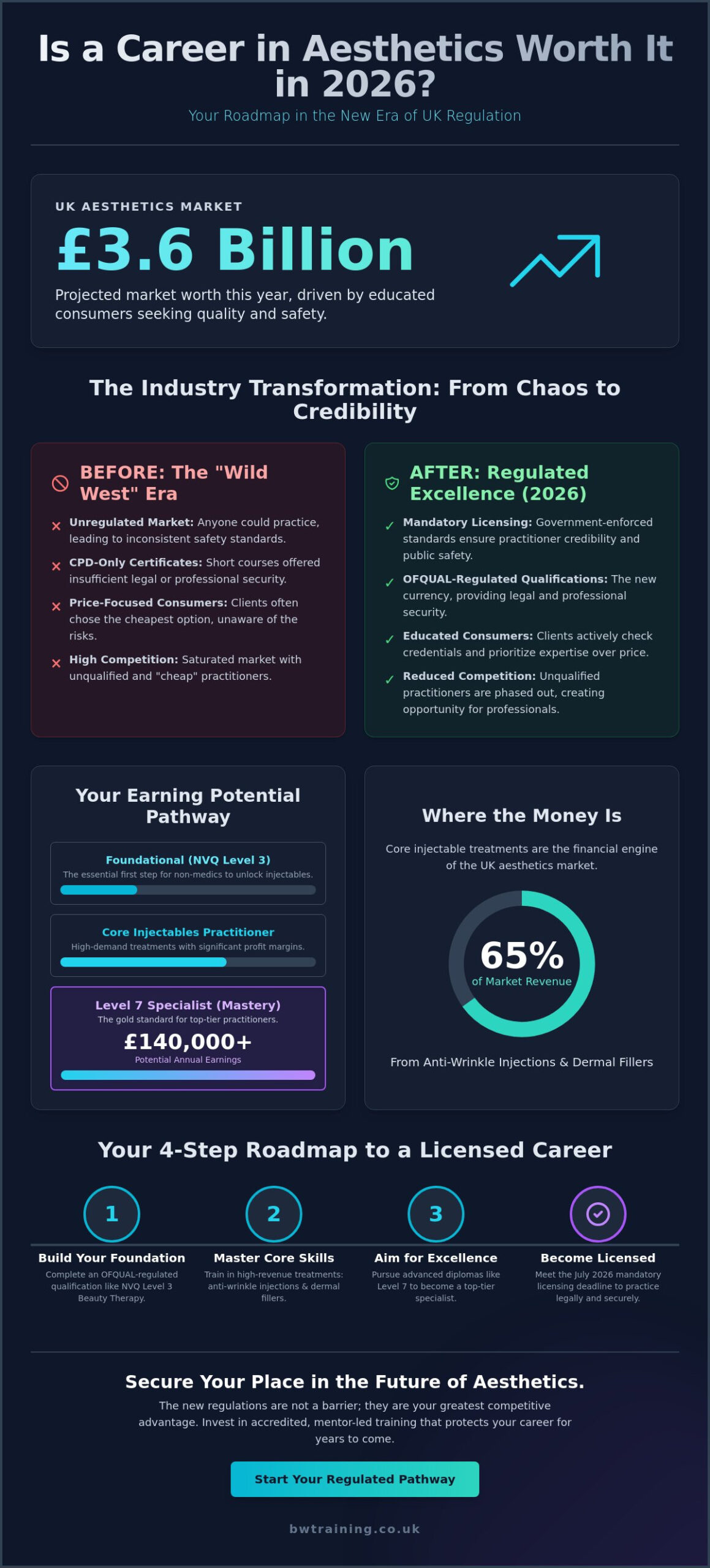
We believe these changes are actually your greatest competitive advantage. This guide shows you how to turn regulation into professional security and tap into a UK market projected to be worth over £3.6 billion this year. You’ll discover the clear roadmap to becoming a licensed practitioner, the truth about earning potential that can exceed £140,000 for Level 7 specialists, and how to choose a training pathway that protects your investment for years to come. Mastery equals security, and we’re here to help you build a foundation that lasts.
Key Takeaways
- Understand why the new 2026 mandatory licensing scheme is a professional advantage that builds immediate trust and authority with your clients.
- Determine if is a career in aesthetics worth it 2026 by analyzing the projected £3.6 billion market growth and the high profit margins of core injectable treatments.
- Learn how foundational qualifications like NVQ Level 3 Beauty Therapy serve as the essential first step toward a secure and regulated aesthetics career.
- Discover how stricter regulations actually reduce your competition by removing unqualified practitioners and rewarding those with accredited training.
- Explore the practical benefits of choosing a mentor-led training environment that prioritizes small-group learning and hands-on experience with live models.
The UK Aesthetics Market in 2026: A Landscape of Growth and Regulation
For years, the UK aesthetics industry operated without a clear safety net. That changed in 2026. The shift from a “Wild West” environment to one of “Regulated Excellence” has redefined what success looks like for new practitioners. If you’re asking is a career in aesthetics worth it 2026, the answer lies in this newfound professional stability. Government licensing isn’t just a hurdle; it’s a shield for your reputation and a guarantee of your credibility.
Consumer demand for non-surgical treatments has reached record highs this year. People aren’t looking for a quick fix anymore. They want “prejuvenation” and biostimulators that offer natural-looking results over time. The field of aesthetic medicine has matured, and patients now seek treatments that work with their biology rather than masking it. This shift toward subtle enhancements creates a sustainable business model based on long-term skin health rather than one-off, exaggerated procedures.
The New Gold Standard: Licensing and OFQUAL
Regulated qualifications are the new currency of the industry. Short, CPD-only certificates no longer provide the legal or professional security you need to practice. In 2026, OFQUAL-regulated training is the only way to ensure you’re fully compliant with the July licensing deadline. These laws protect practitioners in London and across England by setting a high barrier to entry. We now see the rise of the “Clinical Artisan” as the industry benchmark. This term describes a practitioner who balances technical medical precision with an artistic eye, all while maintaining the highest safety standards.
Market Demand vs. Practitioner Supply
We’re seeing incredible growth in West London hubs like Richmond, Chiswick, and Ealing. The “educated consumer” is the driving force behind this local expansion. These clients don’t just look for the lowest price; they check credentials before booking. They want to know you’ve completed foundational training like an NVQ Level 3 Beauty Therapy or a Level 4 qualification. “Cheap” practitioners are rapidly being phased out because they can’t meet the new mandatory safety standards. This creates a massive opening for professionals who invest in their education. When you choose a regulated pathway, you’re not just learning a skill; you’re securing your place in a £3.6 billion market that rewards excellence over shortcuts.
Calculating the ROI: Is the Financial Investment Worth It?
Starting a new professional path requires a clear look at the numbers. When you ask is a career in aesthetics worth it 2026, you’re looking for more than just a job; you’re looking for a return on your investment. We view training as a strategic investment in your future self rather than a simple expense. The financial rewards in this sector are significant for those who prioritize high standards and regulatory compliance from day one.
Your journey often begins with foundational qualifications that build clinical confidence. An NVQ Level 3 Beauty Therapy serves as the essential baseline. This qualification provides the physiological understanding needed to safely transition into advanced injectables. While foundational steps require an initial outlay, they unlock access to core treatments like anti-wrinkle injections and dermal fillers, which represent 65% of the UK market revenue.
Success in 2026 depends on accounting for the “hidden” costs of professional excellence. You must factor in professional indemnity insurance, complications management training, and the use of premium, CE-marked consumables. The new government licensing scheme makes these elements mandatory for legal practice. However, these regulations also act as a filter. They remove low-quality competition and allow you to justify the premium fees that clients are willing to pay for safety and expertise.
For those aiming for the top tier of the industry, the Level 7 Aesthetics diploma offers the highest potential ROI. Research indicates that self-employed specialists with advanced qualifications can earn between £60,000 and £100,000. Those focusing on high-demand injectable mastery have the potential to exceed £140,000 annually. This level of mastery provides a degree of career stability that short, unaccredited courses simply cannot match.
The “Break-Even” Timeline for New Practitioners
Recouping your investment happens faster than you might think. A typical practitioner can often cover the cost of a Foundation Dermal Filler course within their first ten to fifteen client bookings. If you’re an experienced therapist, “Fast-Track” pathways allow you to bridge the gap to advanced aesthetics even more efficiently. Premium pricing is only possible with accredited training; clients in 2026 won’t pay expert rates for non-regulated certificates.
Diversifying Revenue with Advanced Skin Rejuvenation
A multi-modality approach is the key to consistent monthly revenue. Treatments like microneedling and chemical peels have low consumable costs and high profit margins. By adding polynucleotides and skin boosters to your menu, you increase the lifetime value of every client. This holistic strategy ensures your clinic remains profitable throughout the year, regardless of seasonal trends. If you’re ready to start building your professional foundation, exploring our aesthetics training pathways is the first step toward these financial goals.
Beyond the Balance Sheet: The Lifestyle and Emotional Rewards
Success in aesthetics is measured by more than just profit margins. When weighing up if is a career in aesthetics worth it 2026, you must look at the lifestyle you’re building. Running a boutique clinic in West London hubs like Hounslow or Ealing offers a level of professional freedom that few other industries can match. You set your own hours, choose your client base, and curate an environment that reflects your personal standards of care. This autonomy is often the primary driver for those seeking a better work-life balance.
The transition from a service provider to a clinical expert and business owner is profound. You’re no longer just following a script; you’re making critical decisions that impact patient wellbeing. This shift brings a sense of purpose that traditional retail beauty roles often lack. It’s about taking ownership of your career path and building a legacy in your community. We believe this sense of agency is vital for long-term professional happiness.
The Power of Client Transformation
Aesthetics is a people business first. While technical skill is vital, the psychological reward of restoring a client’s confidence through subtle enhancements is unmatched. We see this every day in our training sessions. A well-executed treatment plan does more than smooth a line; it helps a person feel renewed and empowered. By focusing on bespoke consultations, you build long-term relationships based on trust. This emotional security is the foundation of a sustainable practice. Being the trusted, local practitioner in your community means you’re part of your clients’ life milestones, providing job satisfaction that goes far beyond a paycheck.
Autonomy and Career Longevity
Many professionals join us to escape the burnout of high-pressure NHS environments or the limitations of traditional retail beauty roles. Aesthetics offers a way to scale your income without sacrificing your personal life. You might start as a mobile practitioner, but with advanced qualifications like the Level 7 Aesthetics diploma, you have the credentials to open a multi-room academy or a high-end clinic. This career path allows for natural growth over decades. The professional self-assurance gained from mastery ensures you remain relevant in a changing market. You’re investing in a future where you are the architect of your own success, balancing a high-income career with the time needed for family and personal growth.
The ‘Hard Truth’ of 2026: Why Regulation is Your Biggest Opportunity
Many aspiring practitioners look at the new licensing requirements and see only red tape. They worry that the 2026 landscape is too restrictive or complex to enter. We see it differently. These regulations are the single greatest gift to professional practitioners. When you ask is a career in aesthetics worth it 2026, you have to consider the value of a marketplace where “cowboy” injectors no longer exist. Strict licensing acts as a filter, removing those who prioritize profit over patient safety and leaving the field open for dedicated professionals.
True professional standing in 2026 is defined by your ability to handle the unexpected. Mastery of complications management is now a mandatory mark of a professional rather than an optional extra. Clients are more educated than ever; they don’t just want a treatment, they want the security of knowing they’re in capable hands. For those on the non-medic pathway, the route to success remains vibrant and viable. By progressing through the right NVQ levels, you build a portfolio of evidence that proves your competence to both regulators and insurers.
Navigating the OFQUAL and JCCP Requirements
The days of “attendance certificates” are over. In 2026, these hold no weight with local authorities or insurance providers. Insurance companies now prioritize practitioners who hold OFQUAL-regulated qualifications from Level 4 through to Level 7. The Joint Council for Cosmetic Practitioners (JCCP) has set a clear standard for practitioner safety that we fully endorse. Holding a regulated qualification means your skills have been independently verified. This isn’t just about ticking a box; it’s about the emotional security that comes from knowing you’re fully compliant with the law.
Future-Proofing Your Aesthetics Career
A sustainable career is built on a deep understanding of the human body. Investing in Anatomy and Physiology provides the essential foundation for every injectable treatment you’ll ever perform. It’s the difference between guessing and knowing exactly where a product should be placed. Continuous professional development (CPD) is also a mandatory requirement for your license renewal. We view these regulations as a shield for your business reputation. They ensure that every practitioner in the industry maintains a high standard, which elevates the entire profession. If you’re ready to secure your future in this regulated landscape, you can apply for our Level 7 Diploma to reach the highest standard of practitioner recognition.
Building Your Future with Beautiful World Training Academy
Deciding on a new professional path is a significant life choice. When you ask if is a career in aesthetics worth it 2026, you’re looking for a partner who understands the high stakes of health and safety. Beautiful World Training Academy brings over 10 years of experience in Hounslow and West London to your education. We’ve guided hundreds of practitioners through the industry’s complexities, focusing on the emotional security that comes from true clinical mastery. We don’t just teach techniques; we build the professional confidence you need to thrive.
We believe training is a genuine investment in your reputation. That’s why we offer accredited, OFQUAL-aligned pathways that take you from NVQ Level 2 through to our Level 7 Diploma in Aesthetics Practice. Our sessions are built around small-group, hands-on training with live models. This ensures you leave with the practical skills needed to perform treatments safely and effectively from your very first day. We don’t just act as your instructors; we serve as your steady mentors long after your course ends, providing the support you need as you grow your business.
Why West London Professionals Choose Us
Local expertise matters in a regulated market. Professionals from Richmond, Twickenham, and Ealing come to us because we understand the specific needs of the West London community. We provide access to the latest 2026 treatment protocols, including advanced biostimulator training and skin rejuvenation techniques. Our “Beautiful World” approach is intentionally designed to be reassuring and professional. We help you move past the “service provider” mindset into the role of a clinical expert, ensuring you’re fully prepared for the July licensing requirements.
Your Next Steps to Success
Your journey toward a regulated, high-income career begins with a single, intentional decision. We encourage you to book a consultation with us to map out your specific goals and discuss which of our 20+ courses is right for your experience level. Choosing an academy that treats you as a partner is the best way to ensure your long-term success in this £3.6 billion industry. We’re here to provide the roadmap, the training, and the professional self-assurance you need to succeed. Explore our accredited aesthetics courses and start your 2026 journey today.
Secure Your Professional Future in a Regulated Market
The transition toward mandatory licensing in 2026 represents a turning point for the UK aesthetics industry. By moving away from unaccredited short courses and embracing OFQUAL-regulated qualifications, you’re building a business on a foundation of safety and trust. Deciding is a career in aesthetics worth it 2026 comes down to your willingness to embrace these professional standards. For those who prioritize clinical excellence, the rewards include a share of a £3.6 billion market and the professional autonomy to run your own boutique clinic.
We’ve spent over 10 years providing training excellence in West London, helping practitioners master everything from NVQ Level 2 through to the Level 7 Diploma. Our small group sizes and dedicated live model practice ensure you gain the self-assurance needed to excel in this competitive landscape. You aren’t just completing a course; you’re investing in a lifelong career protected by the highest regulatory benchmarks. We’re ready to act as your steady mentors as you navigate this exciting new chapter.
Start your journey with our accredited aesthetics training programmes today. We look forward to helping you achieve the clinical mastery and career security you deserve.
Frequently Asked Questions
Is the aesthetics industry oversaturated in the UK for 2026?
The UK aesthetics market is not oversaturated; it is undergoing a professional cleanup. While the number of practitioners has grown, the new 2026 licensing laws are removing unqualified “cowboy” injectors from the sector. This shift creates a significant opening for regulated professionals who hold accredited qualifications. Consumers are now actively seeking out licensed experts, meaning the demand for high-quality, safe treatments has never been higher.
Can non-medics still perform dermal fillers and Botox in 2026?
Accredited non-medics continue to thrive in 2026 by meeting the new government licensing requirements. You can still perform these treatments if you have completed regulated pathways like the Level 5 or Level 7 Diploma in Aesthetics Practice. The focus has shifted from your initial background to your verified clinical competence. As long as you operate within the new risk-based categorization system, your career as a non-medic practitioner remains viable.
How much can an aesthetics practitioner realistically earn in their first year?
Employed practitioners typically start with salaries between £24,420 and £25,758, though London averages reach approximately £31,489. When considering is a career in aesthetics worth it 2026, remember that self-employed specialists often see much higher returns. Those with a Level 7 qualification have the potential to earn over £140,000 annually. Your first-year income will grow as you build a loyal client base through consistent, high-quality results.
What is the difference between a CPD certificate and a Level 7 Diploma?
A CPD certificate confirms you attended a session, but a Level 7 Diploma is an OFQUAL-regulated postgraduate qualification. In the 2026 landscape, a CPD certificate alone is often insufficient for insurance or local authority licensing. The Level 7 Diploma represents the gold standard of training. It demonstrates a deep mastery of anatomy, clinical practice, and complications management, providing the professional security that simple attendance certificates cannot offer.
Do I need a medical degree to be successful in aesthetics?
You don’t need a medical degree to build a successful aesthetics career, but you must commit to clinical excellence. Many of the most respected practitioners in London started with an NVQ Level 3 in Beauty Therapy before specializing. Success depends on your technical skill, your business acumen, and your dedication to safety. The 2026 regulations reward practitioners who prioritize accredited training and professional standards, regardless of their starting point.
What insurance do I need to start my own aesthetics clinic in London?
You must secure specialist professional indemnity and public liability insurance before treating your first client. In 2026, insurers require proof of accredited training, such as a Level 4 or Level 7 qualification, to provide cover. While basic policies can start from around £6 to £8 per month, your specific premium will depend on your clinic’s location and the range of treatments you offer. Always ensure your policy specifically covers complications management.
How long does it take to become a fully qualified aesthetics practitioner?
The time it takes to qualify depends on your chosen pathway and your previous experience. A foundation course provides the initial skills in a matter of days, but achieving a comprehensive Level 7 Diploma typically takes several months of dedicated study. We believe in a steady, structured approach that balances theory with hands-on practice. This ensures you develop the self-assurance and technical mastery required to meet the 2026 government licensing standards safely.